EROS
A new opera production based on Plato’s Symposium
Texts
About
EROS & THE INVASION IN UKRAINE
EROS rehearsals were interrupted by the Russian invasion of Ukraine. The project was born when Elli met the Ukrainian ensemble Nova Opera. After months of rigorous research and development across Ukraine and Greece, the plan was for the Greek artists to relocate to Kiyv in March, in order to start rehearsals for the international premiere at O. in May. With tremendous effort, the Greek team was able to bring the Ukrainian team to safety in Athens.
Finally, I ended up with three different versions of the piece, and very little funding to produce! And we had a month to make this work. I never encountered such a difficult situation in my professional life. We all moved out of our comfort zones. And of course, our friends from the war zone pointed to life and music all the way! What moves me deeply is the optimism of them all.
The invasion in Ukraine found the artists of NOVA OPERA- Serhii Vilka, soprano Anna Kirsh, baritone Andrey Koshman, baritone Ruslan Kirsh, Zhanna Marchinska – cello, Andrey Nadolskyi – percussion, Serhii Vilka – keyboard/flute, Elias Spricht – piano, escaping from Kyiv by electric car, trying to reach the Polish border. Some have succeeded, but Zhanna Marchinska has not yet been heard from, as she is in a city that is heavily bombed.
Co-produced by
Supported by The House of Europe, The Performing Arts Fund NL, The NEON Organization for Culture and Development and the Greek Ministry of Culture.
With the collaboration of Nova Opera, Ukraine
Director's Note
“EROS” has been redesigned from scratch in the weeks following the Russian invasion. We speak from a place of loss, fear, pain, and war. At the beginning of November 2021, ODC Ensemble and Elli Papakonstantinou began collaborating with NOVA OPERA – a group of young Ukrainian artists exploring new ways of developing music theatre. A broad team of Greek artists worked with the Ukrainian performers to create “EROS”, a new opera production based on Plato’s Symposium.
Credits
Direction: Elli Papakonstantinou (based on Plato)
Libretto: Louisa Arkoumanea, Elli Papakonstantinou
Music Composition: Katerina Fotinaki, Serhii Vilka
Set Designer Constantinos Chaldaios
Live visuals: Giannis Papoutsis, Fanis Sakellariou
Assistant to the Director: Katerina Kataki, Vivi Petsi, Fanis Sakellariou
Cast and Musicians:
Katerina Fotinaki (voice, prepared guitar), Anna Kirsh [soprano], Andrey Koshman [baritone], Ruslan Kirsh [baritone], Zhanna Marchinska [cello], Andrey Nadolskyi [percussion], Serhii Vilka [keyboard, flute]
Dates
May 26, 2022 O. Festival Rotterdam, Netherlands June 14-19, 2022 Municipal Theatre of Peiraeus Piraeus, Greece October 11-14, 2022 Acco Festival Acre, IsraelVideos
EROS - teaser
Gallery: EROS
Reviews
Savvas Patsalidis | Journal of the International Association of Theatre Critics Critical Stages.
Elli Papakonstantinou has for some years now been in a continuous, consistent and beneficial dialogue with the international theatre community and international developments.
Restless and curious by nature, she is constantly expanding her performative horizons, taking the risk of breaking the stability of genres, identities, selves, nationalities, languages, signs and comfort zones. She is constantly operating on the edge, in an undefined ideological zone, consciously cultivating her own borderline aesthetic, where anything is possible (and dangerous). In this sense, Papakonstantinou does not belong somewhere completely. Unfaithful to the confinements of boundaries and definitions (and consequently destinations) she is and is constantly educating us with transgressions, as now in the musical performance Eros.
We are talking about a postmodern pastiche of fragments and artistic codes (cinema, poetry, music, narrative), a multi-faceted, multi-layered and multi-lingual rendering of the elusive love, of desire. There is no centre to contain the images and sounds of the bodies and voices (Greek and Ukrainian artists of the Nova Opera group). How is desire really “concentrated”, subdued, the director seems to ask? And where? And in what terms and with what tools of rationalization? Everything in the performance of love is in an “eccentric” (“a-logical”) state, in a trajectory of constant search and yet flight, hence the unexpected encounters of the protagonist’s love with death, despair, desolation, ruins, violence, war, annulment, but also poetry, lyricism, hope. Everything flows wildly and impulsively, in all directions, creating a “siege-like” (more spatial than local–space vs. place) environment for the participants in the “platonic” symposium viewers.
Javier López Piñón | Theaterkrant
It should have been an opera inspired by Plato's Symposium...
… a collaboration between the Greek ODC Ensemble and the Ukrainian Nova Opera under the direction of Elli Papakonstantinou, produced especially for the O. Festival in Rotterdam. The joint rehearsals would have taken place in Kyiv. But: the members of Nova Opera had to flee the country. A week before the start of rehearsals, the Russian army launched its invasion in Ukraine. Current events had torpedoed the original plan and the members of both ensembles came together in Rotterdam to consider the new situation.
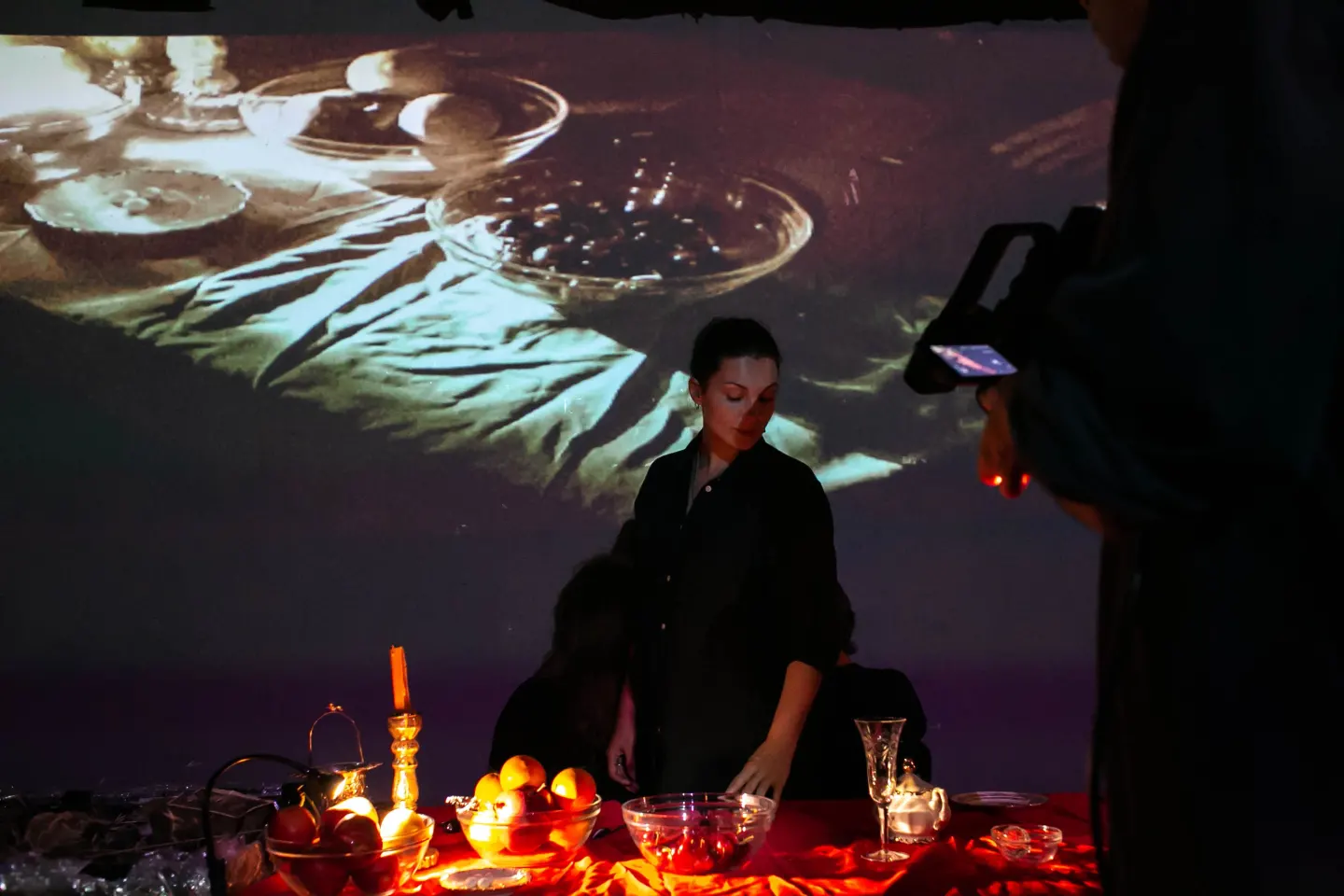
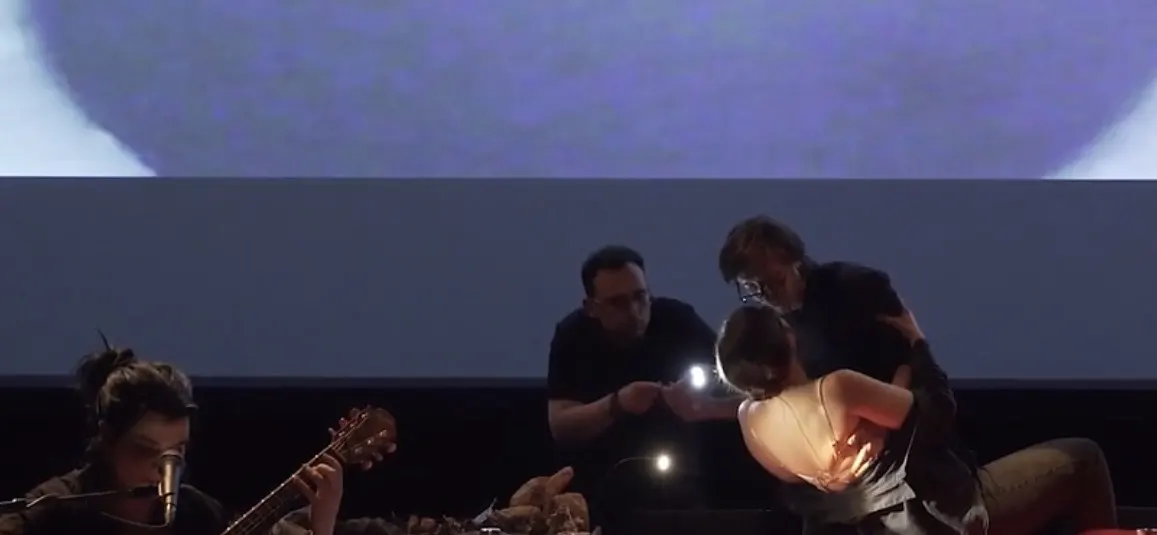
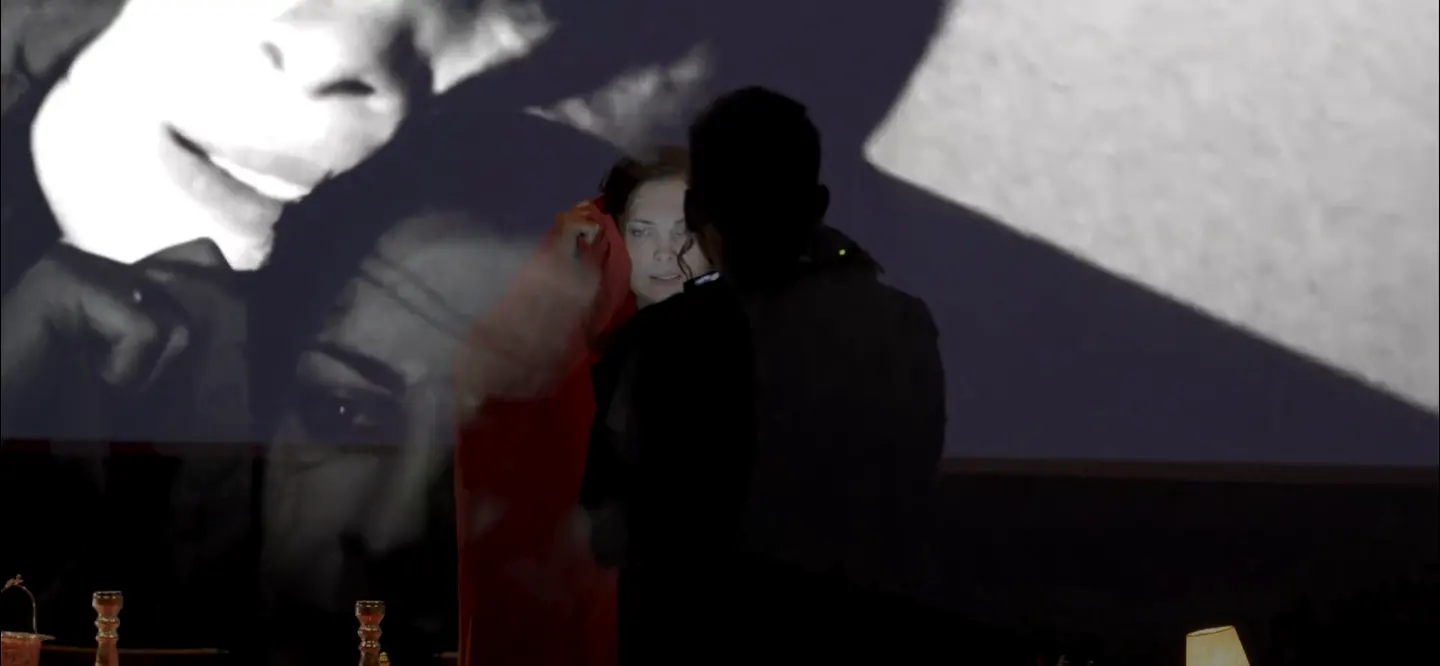
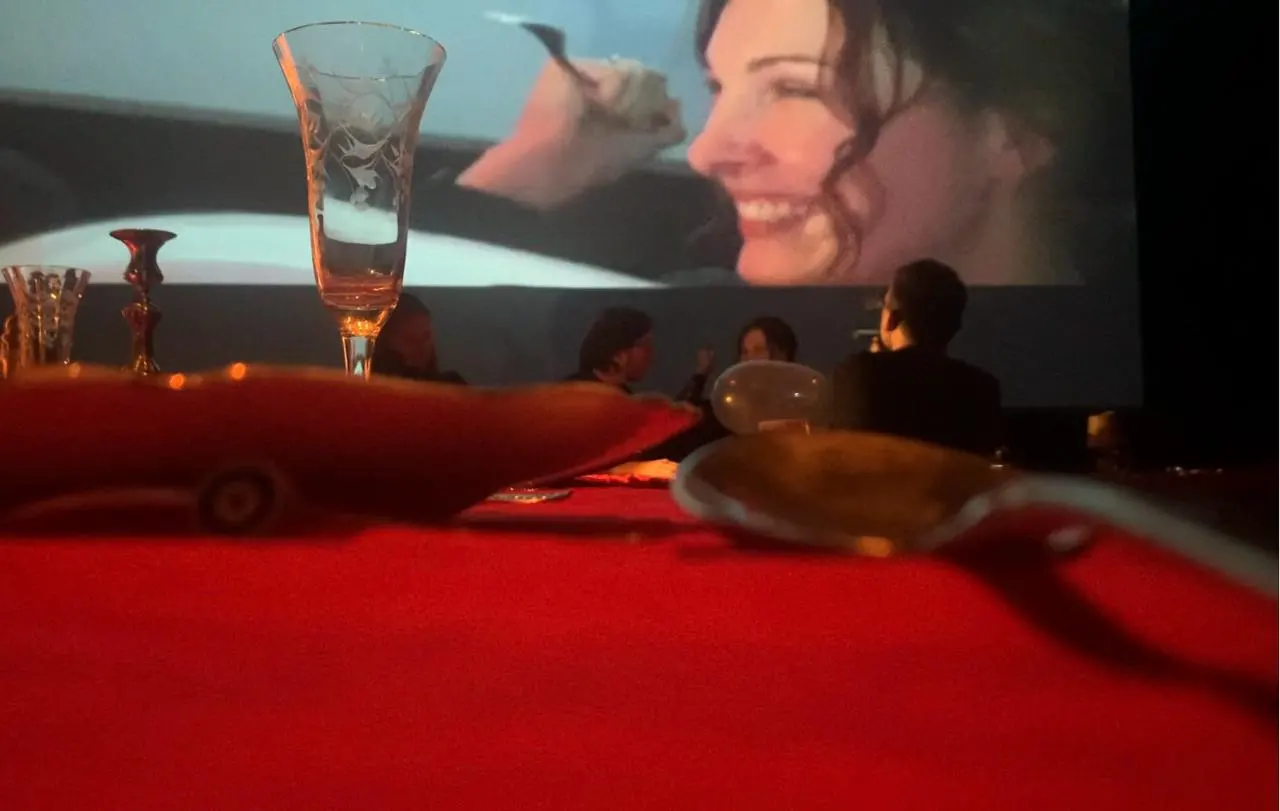
Under the title Eros, the ensembles show the results of this frustrated collaboration. The material on display comes fresh from the oven and is served steaming. The idea of a symposium of the originally planned opera has been maintained: the audience is received at long white-covered tables and welcomed by the group that occupies like a committee red-covered tables. Behind the committee hangs a full-screen projection screen.
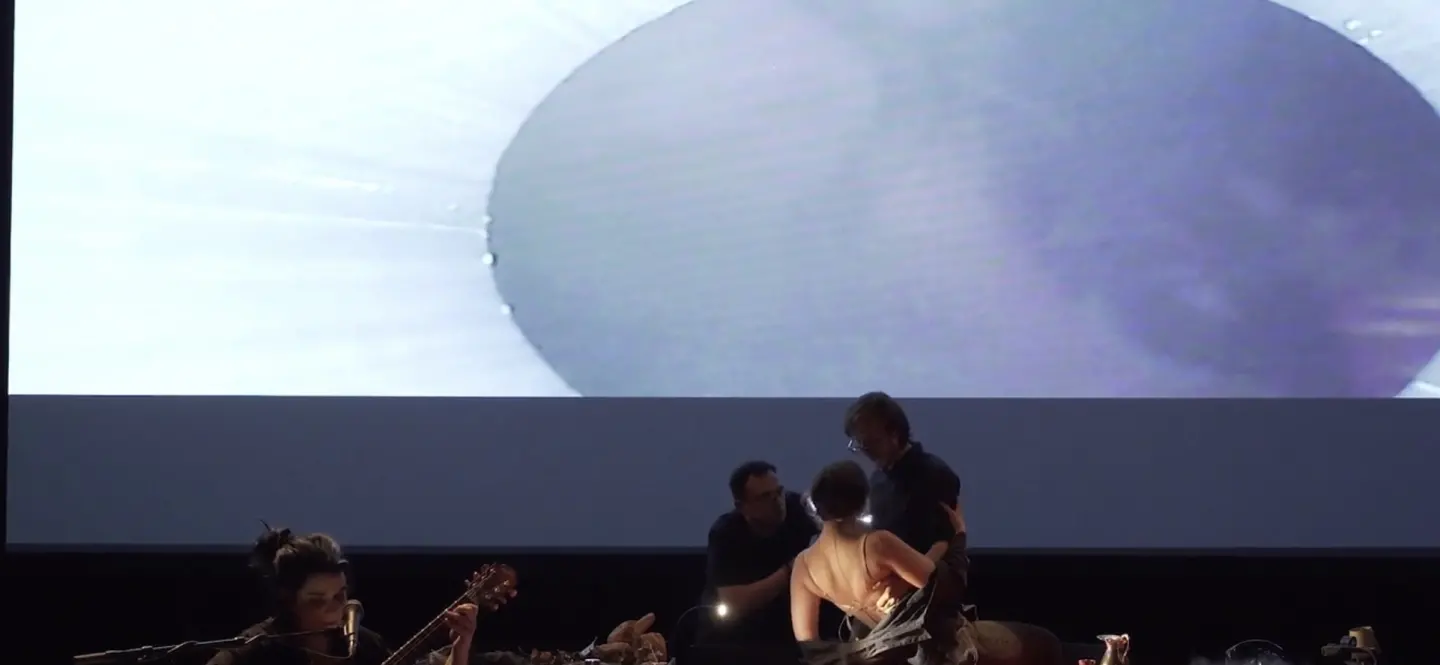
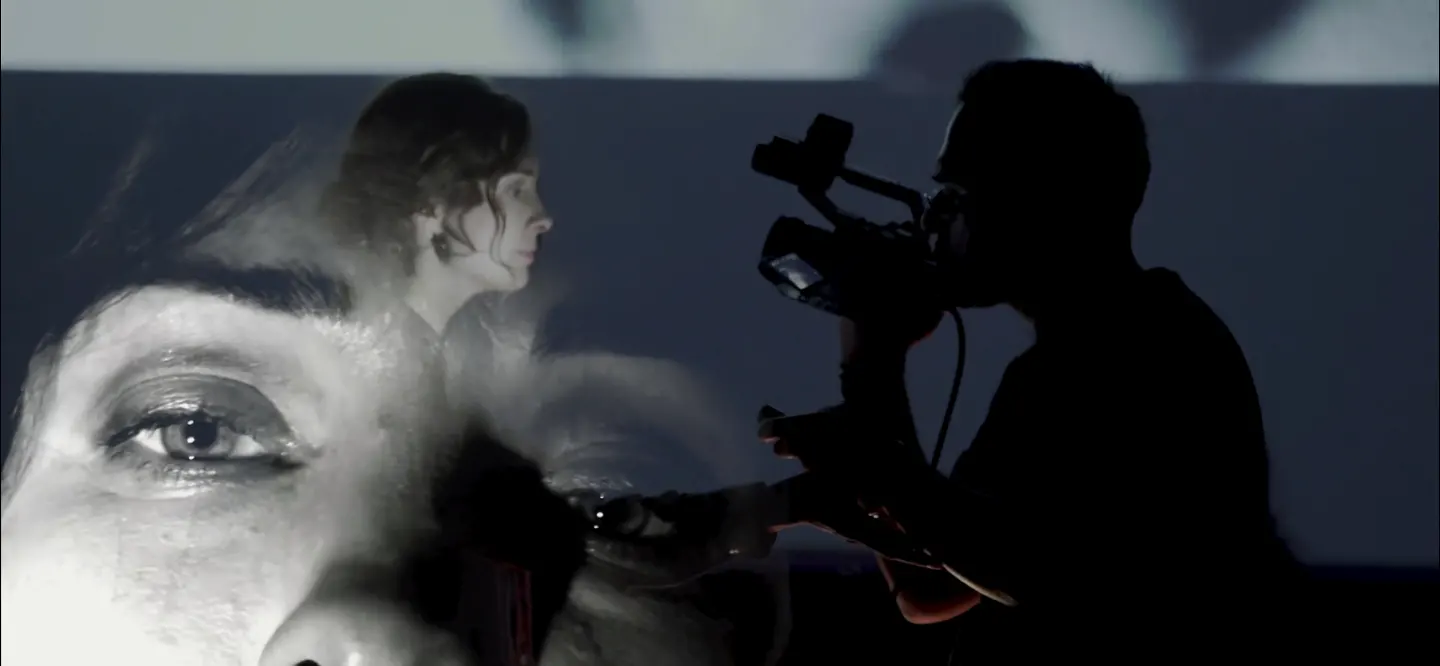
A camera on a tripod and a second camera is operated live to provide images that are projected on it. Four vocalists, completed by guitar, cello, keyboard and a percussionist, invite us to make a choice from the menu in an energetic atmosphere. We are addressed as ‘soldiers of love’. The public turns out to be guests at a feast dedicated to Eros. Love will be the topic of conversation. But then the air raid siren goes off and the expectant excitement is cruelly cut short.
The actuality of the war in Ukraine is shown in foggy, distorted images. It seems that this symposium has moved into a bomb shelter. The committee behind the table plays with an old black-and-white photograph that ends up inside an inflated balloon, creating the image of what appears to be a secure armour, but is in reality an extremely fragile bubble.
The mobile camera registers, but also manipulates the images. The camera drives across the table, showing the plates that remain empty. At one point, we are given a glimpse into what looks like a plant, but as the camera gets closer, we see a miniature soldier half-buried in the earth: the battlefield is never far away.
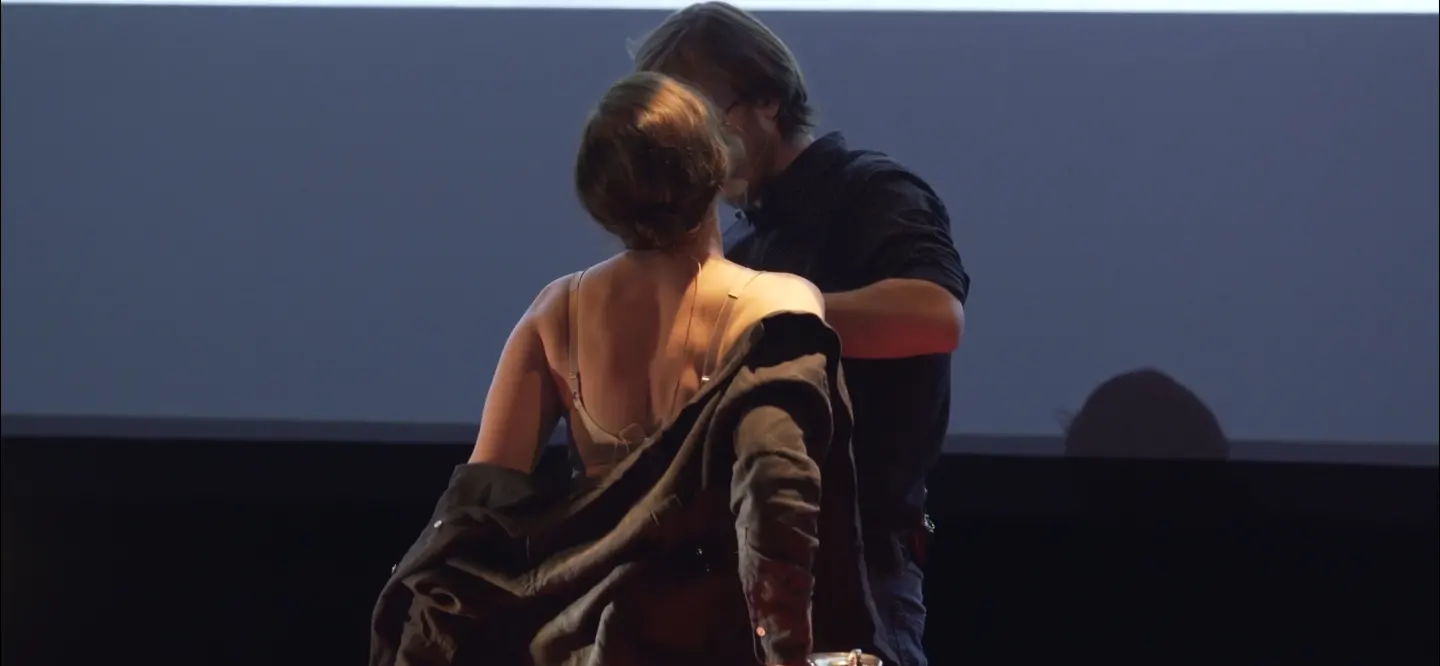
The director is constantly on stage and in a calm female voice she regularly refers to Plato’s symposium. There are direct references to that classic dialogue: she mentions the names of the participants in that symposium, and an anecdote is repeated. Underneath the acts, there is always a musical fabric that sometimes receives independent attention.
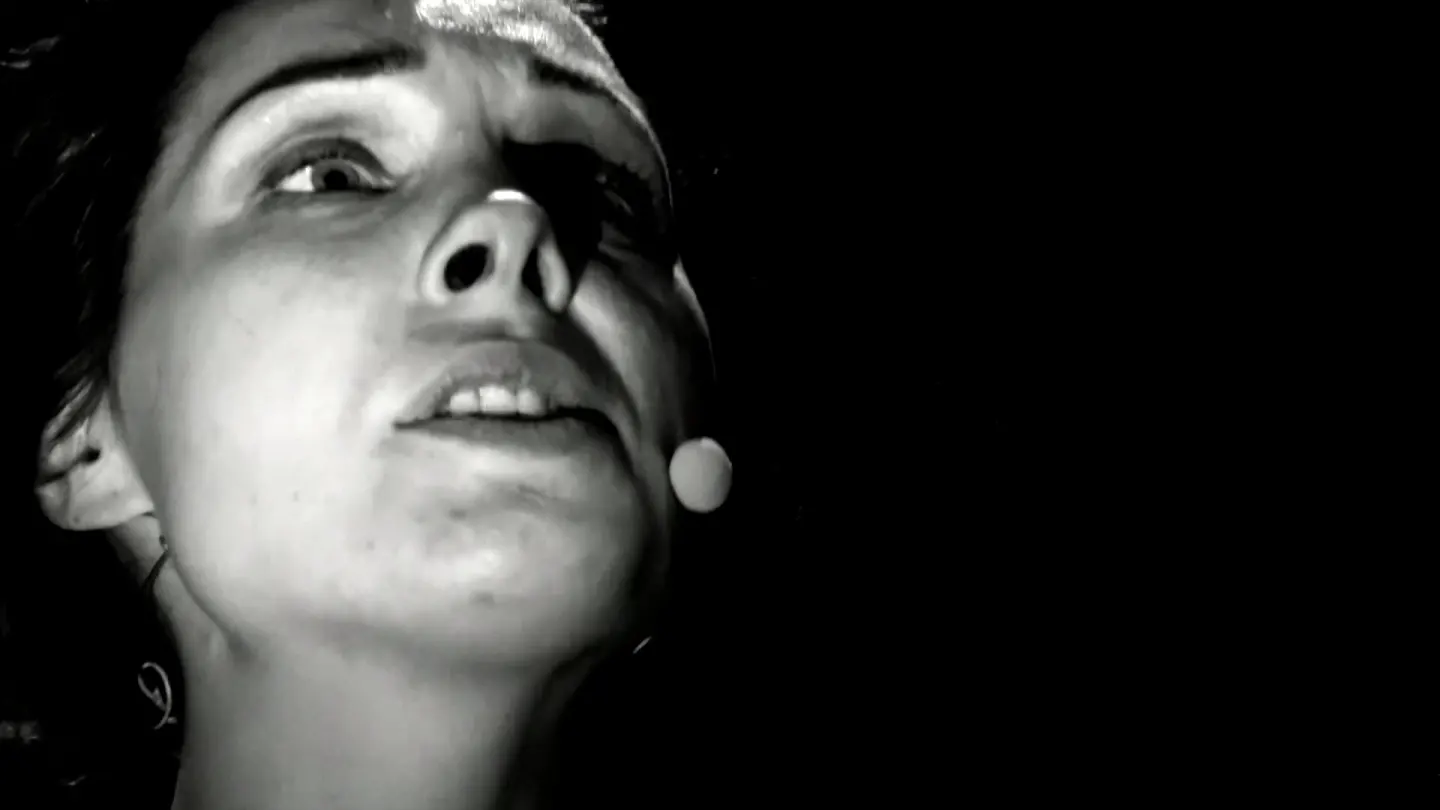
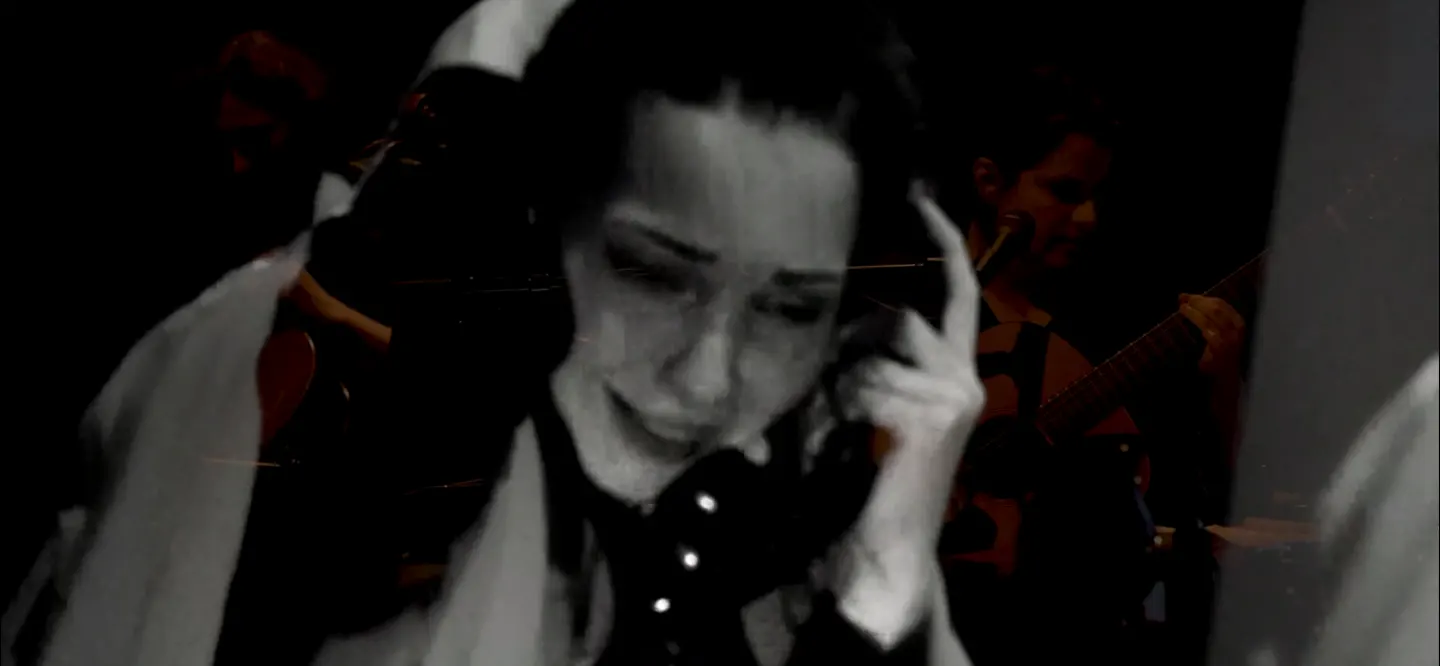
The last part of the performance focuses on the soprano Anna Kirsh. Perhaps the antique black telephone is a reference to Poulenc/Cocteau’s Voix Humaine: Kirsh is also processing the absence of a loved one. But she criticizes one of the better-known passages from the Symposium and contradicts Aristophanes’ account in which he claims that since Zeus split man in two, man always looks for the other half to become complete again.
From the moment the air raid sirens and the bombing are recalled, the performance follows an erratic path as if the performance itself had processed a fragmentation bomb. The piece consists of disparate ingredients that culminate in the crisis embodied by the soprano. Perhaps the soprano role can be identified with Ukraine itself. In any case, the performance itself is very moving and functions as a successful metaphor for the uncertainty of love.